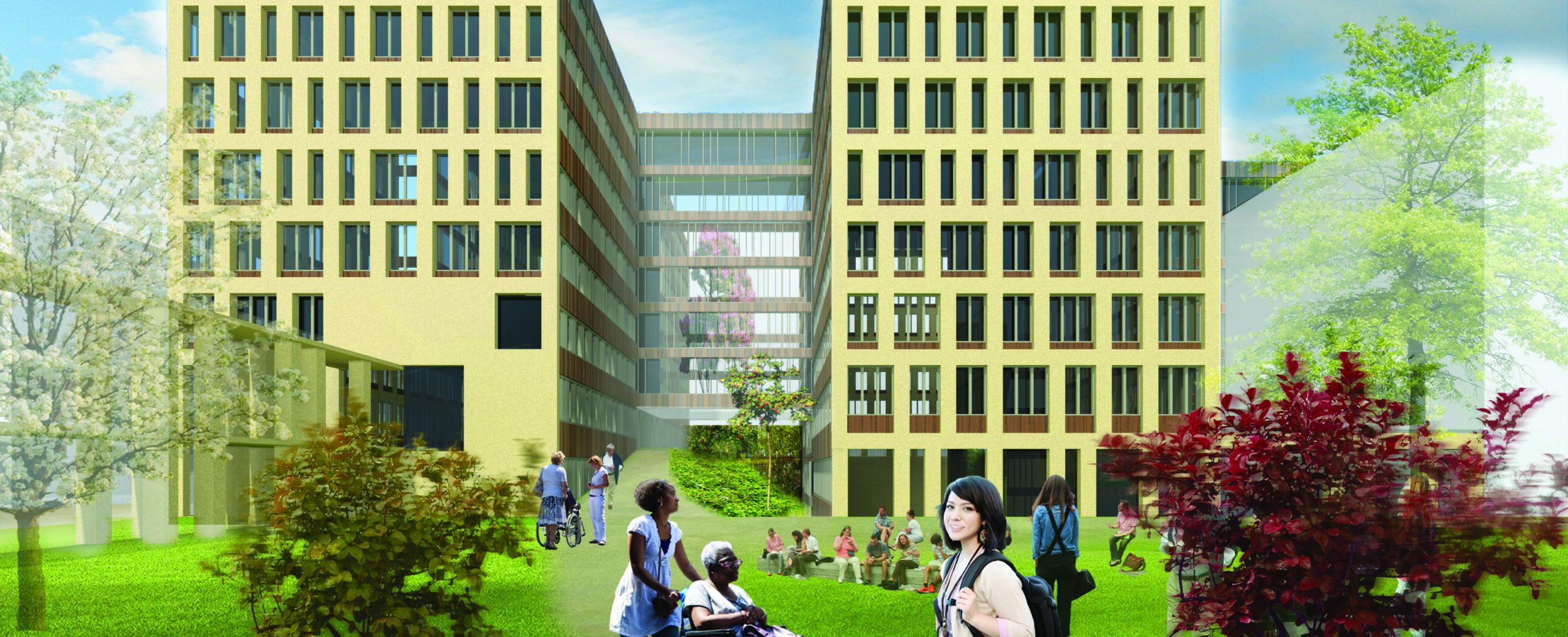
Care facilities grouped around public heart. The patient at the centre, surrounded by care.
Healing environment created through evidence-based design. Flexibility and careful urban integration were the spearheads of this design. EGM translated a complex functional and urban design question into a recognizable plan that focuses on patient and health care provider.
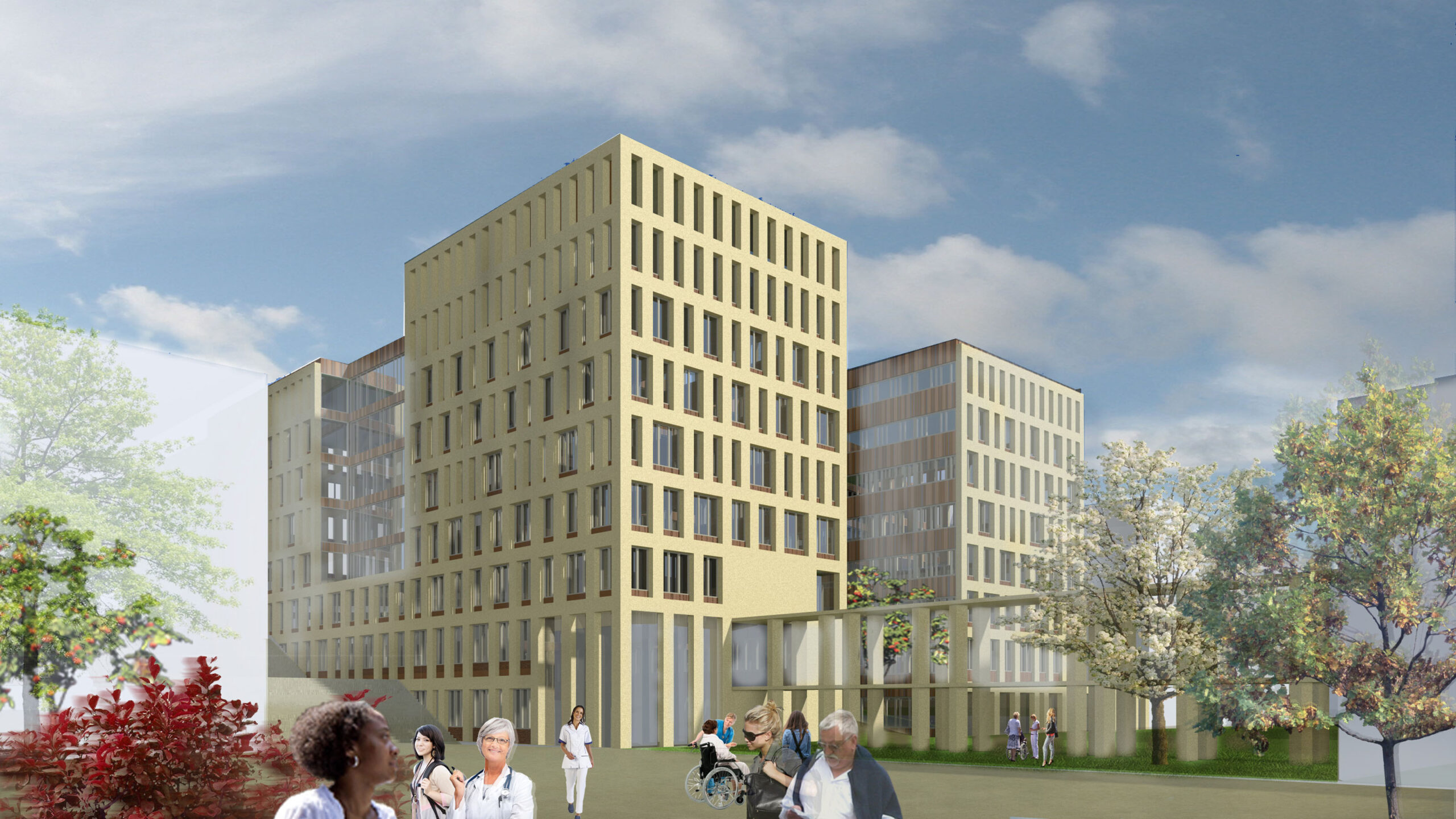
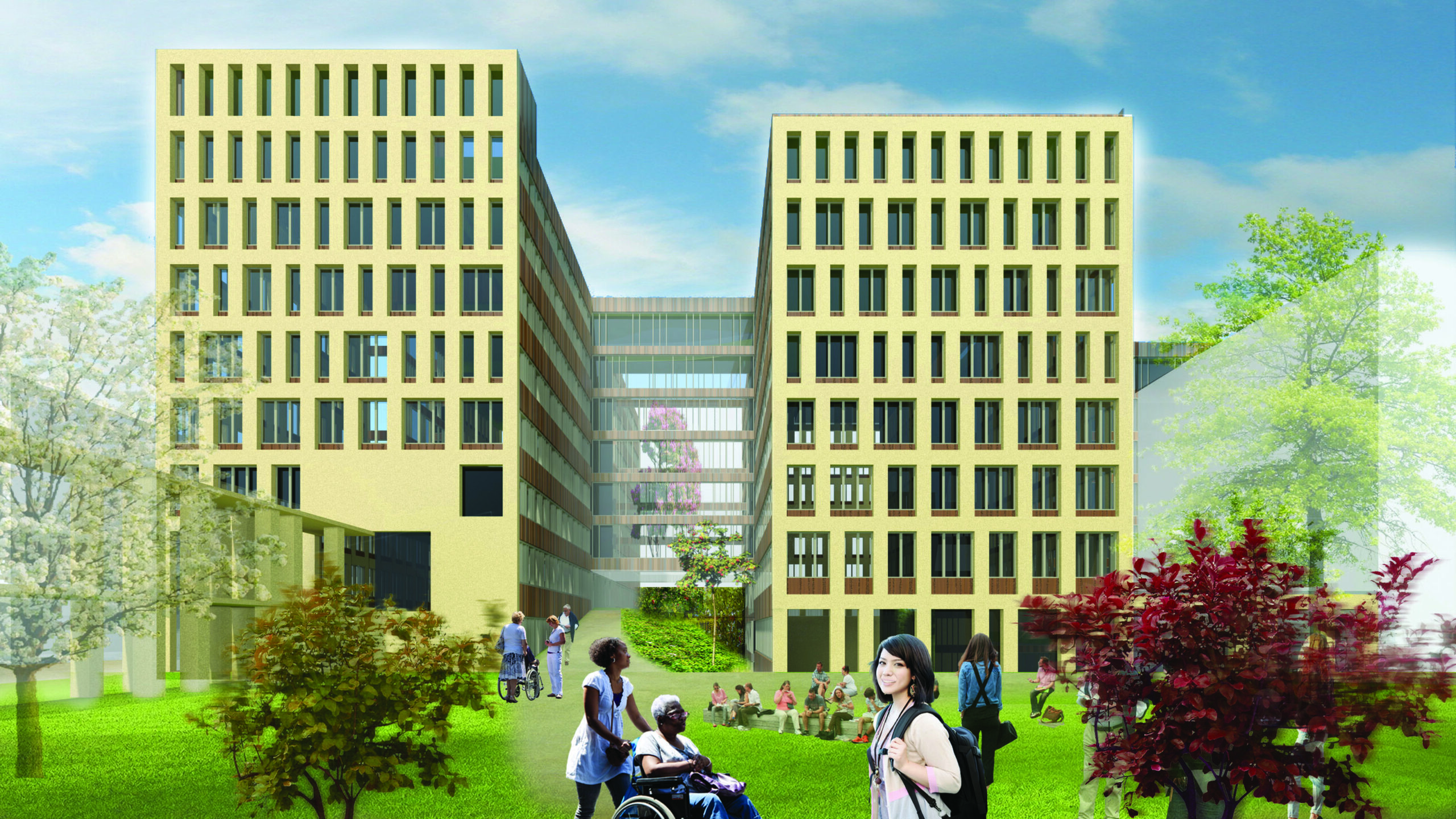
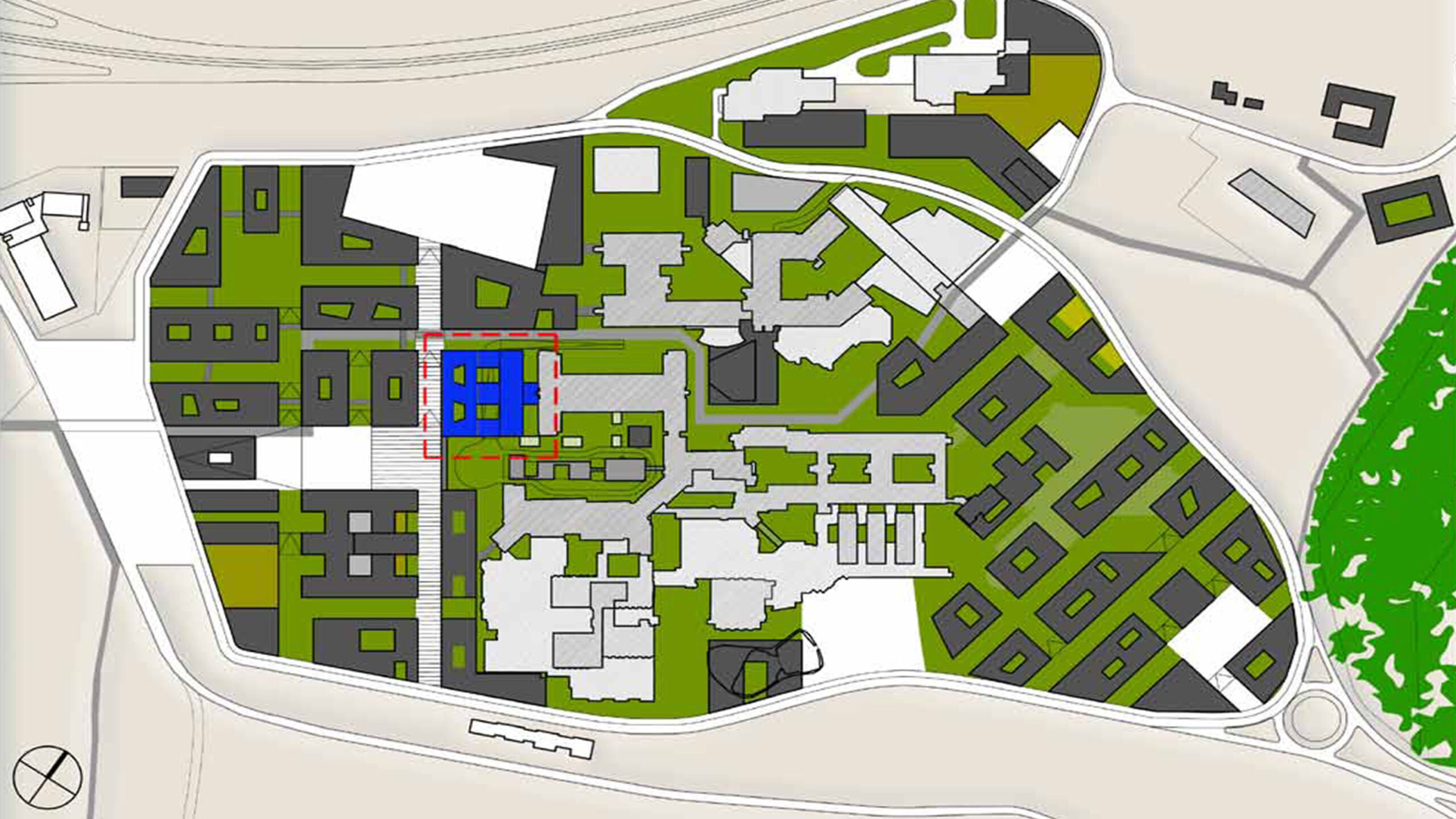
The often uncertain future of the patient calls for an efficient, safe and pleasant environment that supports well-being to the full. Light, clarity, greenery and space are the central concerns in the design of the university oncology centre.
Embedded in surroundings
The building is compactly arranged around two green lungs that provide light, air and views. It is designed as an individual, recognizable building within the urban plan drawn up by AWG architects. Height differences at ground level have been exploited to lend additional quality to the radiotherapy department in the basement. Daylight is optimized on every level, with facades that more transparent on the lower levels on account of the shade provided by neighbouring buildings. The character of the building is urban on the exterior, and natural and green around the patios within the plan.
Evidence-Based Design
Leuven University Hospital is one of the biggest hospitals in Belgium, housing education and research facilities as well as providing care services. The heavy medical care and often uncertain future of the patient calls for an environment that supports efficiency, safety and well-being to the full.
Organized, spacious and transparent
It is important that patients who undergo radiotherapy treatment are welcomed into a calm and open environment. The clear, spacious and transparent design of the patient’s route from the entrance to the radiation room reduces stress. Moreover, EGM proposes a new type of radiation room (non-labyrinthine) that enhances the patient experience, sustainability and future value. From the double-height entrance hall at the radiation room, visitors and health care providers enjoy daylight and views of the green patio. Comfort and alertness are boosted as a result. The nursing wings are connected to a central heart, and the vertical connection through the voids improves orientation within the building.
Future-Proof
Medical knowledge and technology develop all the time, and the dynamism of care processes around the patient is high. This design allows care departments to grow and shrink in various ways with ease, not only within the building but also through the connections with the existing building. The design also provides for the future extension of the radiation room.